


.png)
In my work, I often see how confusing magnesium supplements can be. There are many forms, like glycinate, citrate, and oxide, and each one is marketed as the “best.” The truth is that the right choice depends on your goals, tolerance, and health context. That is why I want to focus on magnesium glycinate here and walk through it in a clear, evidence-informed way.
Magnesium is an essential mineral involved in hundreds of biological processes, including energy production, neuromuscular communication, heart rhythm regulation, and bone health. Modern routines such as irregular eating patterns, high stress, frequent coffee intake, and certain medications can increase magnesium needs. As a result, many people consider supplementation and naturally ask, “Which form of magnesium should I choose?”
In this article, I explain the most common questions about magnesium glycinate, including what it is, how it is typically used, who it may be a good fit for, how to approach dosing, and what to consider regarding side effects and interactions. My goal is not to offer a one-size-fits-all answer, but to help you make a more informed decision.
Note: This content is for informational purposes only and does not replace medical advice. If you have a chronic condition, are pregnant or breastfeeding, or take prescription medications, consult a healthcare professional before starting any supplement.
What is Magnesium Glycinate?
Magnesium glycinate is a chelated (bound) form of magnesium with an amino acid called glycine. The term "chelated" means that the magnesium is bound to a carrier (in this case, glycine) that can help it move more easily through the intestine.
- Glycine is an amino acid associated with a calming effect on the nervous system.
- Therefore, magnesium glycinate is more frequently preferred, especially when considering sleep, stress, and nervous system sensitivity.
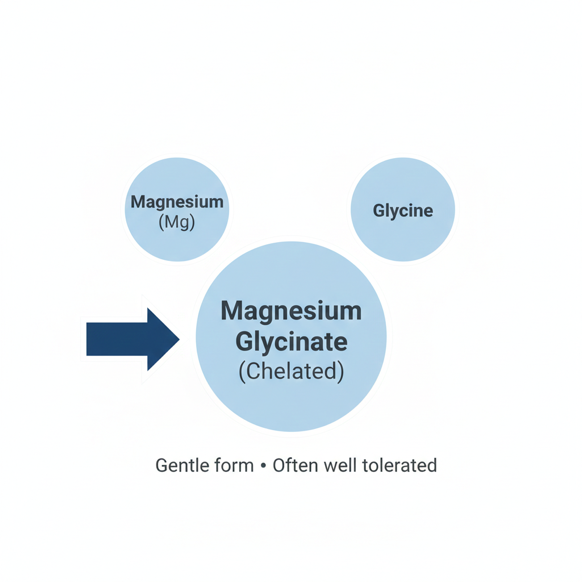
Diagram showing magnesium + glycine forming magnesium glycinate (chelated form)
Are Magnesium Glycinate and Magnesium Bisglycinate the Same?
Both names are common in the market. Most products use the term "bisglycinate," and in practice, they usually refer to the same form. The ingredients listed on the label, the amount of "elemental magnesium," and any auxiliary components make a significant difference.
What are the Benefits of Magnesium Glycinate?
Magnesium has a wide range of effects on the body. The most common reasons users prefer the glycinate form are:
1) It Can Support Sleep Quality
Magnesium plays a role in regulating the nervous system. Since the glycine component is associated with "relaxation," magnesium glycinate is often seen as a suitable option for a nighttime routine.
- Those who say "my mind doesn't stop when I go to bed," those experiencing intense stress, or those experiencing muscle tension often seek out this form.
Usage tip: If used for sleep purposes, it is generally preferred after dinner or 1-2 hours before bedtime.
2) Support Against Stress and Tension
The need for magnesium can increase during stressful periods. Because magnesium glycinate is gentler on the digestive system, regular use is easier for some people. The goal here is not a "miracle effect"; it's a sustainable contribution combined with nervous system support and lifestyle adjustments.
3) Muscle Function and Cramps
Magnesium plays a role in the muscle contraction and relaxation cycle.
- Those who exercise
- Those who experience night cramps
- Those with intense desk work/strained neck and shoulder complaints
often consider magnesium supplements.
Note: Cramps don't always mean magnesium deficiency. Many factors also affect it, such as fluid and electrolyte balance, potassium, sodium, circulation, shoe choice, and exercise plan.
4) PMS Period and Seasonal Complaints
Some people may experience tension, appetite fluctuations, muscle aches, and sleep problems during the premenstrual period. Magnesium is used as a supportive treatment during this time.
The best approach is to plan with an individual assessment (nutrition, stress, sleep, exercise).
5) May Be More Suitable for Those with Digestive Sensitivity
Some forms of magnesium (e.g., citrate) may be more prone to increasing bowel movements.
The glycinate form is considered among the more well-tolerated options for many people. (However, individual tolerance varies.)
Key Advantages of Magnesium Glycinate
Absorption and Tolerance
The glycinate form, thanks to its chelated structure, can support transport in the intestines, and some individuals may experience less gastrointestinal discomfort.
The Issue of “Elemental Magnesium”
When taking supplements, the most important thing to look for is not the “magnesium compound” on the capsule/tablet label, but the amount of elemental magnesium.
Example:
The label may say “Magnesium (bisglycinate)”, but it must also include an expression such as
“Elemental magnesium: X mg”.
Magnesium Glycinate, Citrate, or Oxide?
Magnesium Oxide
Although it appears to have high elemental magnesium content, absorption/tolerance can vary from person to person. It may cause gastrointestinal complaints in some individuals.
Magnesium Citrate
Often preferred for digestive/intestinal support; may cause loose stools in sensitive individuals.
Magnesium Malate
Some prefer it for its focus on energy metabolism (especially for daytime use).
Magnesium L-threonate
A form marketed for its brain-focused properties; the balance between evidence and cost is evaluated according to individual goals.
Magnesium Glycinate (Bisglycinate)
Usually chosen for its focus on sleep, stress, and muscle relaxation, and with the expectation of good tolerance.
Summary:
Citrate can be considered if there is a tendency towards constipation.
Glycinate is preferred if there are sleep/stress issues plus a sensitive stomach.
There is no "single correct form"; it is chosen according to the goal.
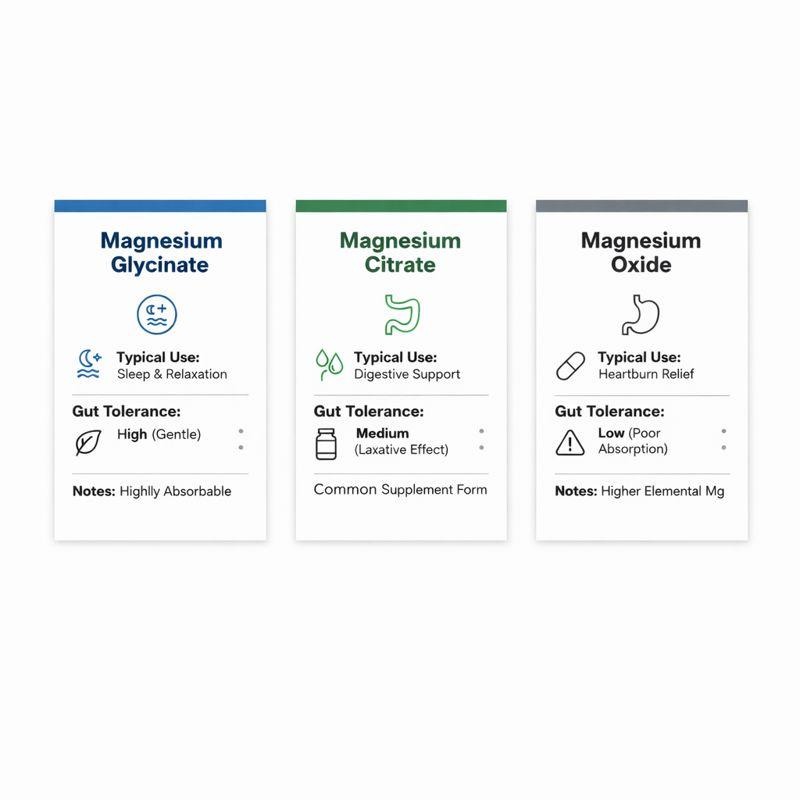
Comparison chart of magnesium glycinate, citrate and oxide forms
Who might benefit from Magnesium Glycinate?
Magnesium glycinate is often considered when both effectiveness and digestive tolerance are priorities.
Magnesium glycinate is particularly preferred by the following groups:
- Those with poor sleep quality and frequent nighttime awakenings
- Those going through stressful or intense periods
- Those experiencing muscle tension, twitching, or nighttime cramps
- Those who cannot tolerate some forms of magnesium due to gastrointestinal sensitivity
- Those who exercise regularly and want to support their recovery (while also considering electrolyte balance)
Who Should Be Cautious? (Contraindications and Warnings)
While magnesium supplements are generally considered safe, the risk increases in some cases:
Those with Kidney Disease
Magnesium is excreted through the kidneys. Magnesium accumulation can be risky in individuals with impaired kidney function. Supplementation is not recommended in this group without a doctor's approval.
Those Taking Regular Medications (Interactions)
Magnesium can reduce the absorption of some medications. The most common are:
- Antibiotics: Tetracyclines and quinolones
- Thyroid medication (levothyroxine)
- Bisphosphonates (bone medications)
Practical rule: A 2-4 hour interval is generally recommended between magnesium and these medications (this may vary depending on individual circumstances).
Pregnancy and Breastfeeding
During these periods, supplements should not be used randomly, even if they are "natural." They should be planned with the advice of the attending physician/dietitian.
How to Choose the Right Magnesium Glycinate Dose?
There are two key considerations:
- Total daily magnesium requirement
- The “upper limit” from supplements and tolerance
Generally, daily requirements for adults vary depending on age and gender. Common approaches for supplements are:
- 100–200 mg elemental magnesium/day for starters
- 200–350 mg elemental magnesium/day range depending on need and tolerance
Important: Some authorities give a “tolerable upper intake level” of 350 mg/day for magnesium from supplements. This limit is determined specifically based on diarrhea/intestinal effects. It may vary depending on individual health conditions.
When to Take?
- Sleep target: Evening / 1–2 hours before bedtime
- Daytime stress/tension: Dividing the dose (morning and evening) may be better tolerated
- Sensitive stomach: Taking it with food is generally more comfortable.
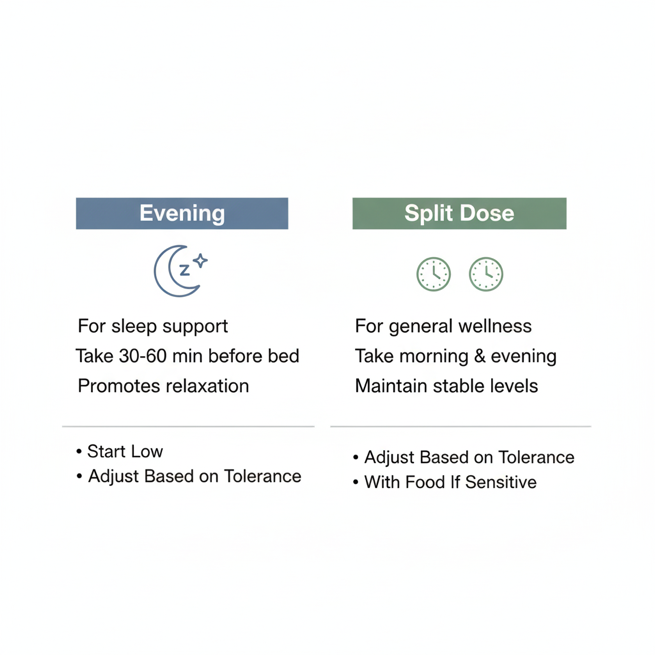
Magnesium glycinate timing guide: evening use and split dosing tips
Are there any side effects of Magnesium Glycinate?
Although most people tolerate it well, possible side effects include:
- Stomach upset, nausea
- Soft stools/diarrhea (generally less common with glycinate form, but possible)
- At very high doses, symptoms such as weakness and low blood pressure (the risk increases, especially in those with kidney problems)
If side effects occur:
- Reduce the dose
- Split the dose throughout the day
- Take it with food
are usually the first steps. If it persists, discontinue use and consult a professional.
What are the Symptoms of Magnesium Deficiency?
A diagnosis of magnesium deficiency may not always be confirmed by a blood test; however, some common symptoms include:
- Muscle twitching, cramps
- Fatigue, low energy
- Impaired sleep quality
- Irritability/tension
- Headaches (may be multifactorial)
These symptoms alone do not necessarily indicate "magnesium deficiency." Many factors, including diet, sleep, stress, iron/B12/vitamin D, thyroid, and hydration, should be considered together.
Magnesium-Rich Foods (To Support Supplementation)
Supplements are not a replacement for nutrition. To increase magnesium intake:
- Nuts: Almonds, cashews, hazelnuts
- Seeds: Pumpkin seeds, chia seeds, flax seeds
- Legumes: Chickpeas, lentils, beans
- Whole grains: Oats, buckwheat
- Leafy greens: Spinach, chard
- Cocoa: Unsweetened cocoa (with portion control)
Mini tip: A simple routine like “1 handful of nuts every day + legumes 3-4 days a week” can significantly contribute to magnesium intake.
What to Look for When Choosing Magnesium Glycinate?
Supplement selection begins with "reading the label":
- Is the elemental magnesium content clear? (in mg)
- Is the form clear? (bisglycinate/glycinate)
- Additives: Are there any unnecessary fillers/colorants?
- Third-party testing/quality certifications
- Dosage per capsule/tablet: Is it appropriate for the daily target?

Checklist for choosing a magnesium glycinate supplement (elemental magnesium, additives, testing)
Frequently Asked Questions (FAQ)
Does magnesium glycinate cause drowsiness?
It is not expected to act directly as a "sleeping pill"; however, it can support sleep patterns through nervous system and muscle relaxation. The effect varies from person to person.
Should magnesium glycinate be used every day?
Short-term (e.g., 4-8 weeks) regular use is common. For long-term use, it is more appropriate to evaluate the need, nutrition, and blood values together.
Does magnesium glycinate cause weight loss?
There is no reliable approach that magnesium glycinate "directly burns fat". Sleep quality and stress management can indirectly support lifestyle; that's all.
Magnesium glycinate or citrate?
Depending on the goal: If there is a tendency towards constipation, citrate is more often preferred; for sleep/stress and sensitive stomachs, glycinate may be more comfortable for most people.
Should magnesium glycinate be taken on an empty stomach or after a meal?
Those with sensitive stomachs may tolerate it better after a meal. However, if you take medication regularly, consult a professional regarding timing.
Conclusion: Who Should Consider Magnesium Glycinate?
Magnesium glycinate, thanks to its chelated structure and generally good tolerability, is a frequently chosen form of magnesium supplementation, particularly for those seeking support for issues such as sleep, stress, and muscle tension. However, there isn't one single "best magnesium" product: goals, tolerance, diet, medication use, and overall health status should all be considered together.
If you are considering trying magnesium glycinate:
- Check the elemental magnesium content on the label,
- Start with a low dose,
- Pay attention to the timing if you are taking medication,
- If you have kidney disease, be sure to consult a professional.
.jpg)
.jpg)
.jpg)
.jpg)
.png)


.png)
.png)
.png)