
The honest answer is better than the marketing answer. Magnesium glycinate may help some adults sleep a little better, especially when poor intake or mild insomnia-like symptoms are part of the picture. The best bisglycinate trial so far found a small but real improvement after 4 weeks. That makes it worth considering, not worth overselling.
Magnesium glycinate is a reasonable sleep-support option for the right person, but it is not a proven cure for insomnia. The strongest glycinate-specific study used 250 mg of elemental magnesium nightly for 4 weeks and found a modest improvement in insomnia symptoms versus placebo. Persistent insomnia, loud snoring, gasping, or major daytime impairment still call for something bigger than a supplement, especially CBT-I or sleep evaluation when appropriate.21012
The fastest way to orient yourself before you read the long version.
Maybe, for some people. Magnesium glycinate now has better support than a lot of internet sleep advice, but the effect looks modest rather than dramatic. It is more accurate to call it a sensible option than a proven insomnia treatment.
The clearest glycinate-specific human evidence comes from the 2025 Schuster randomized, double blind, placebo controlled trial. In 155 adults aged 18 to 65 with self reported poor sleep quality, participants took either placebo or 250 mg of elemental magnesium as bisglycinate each day. After 4 weeks, the magnesium group had a larger drop in Insomnia Severity Index scores than placebo: minus 3.9 points versus minus 2.3 points. That difference reached statistical significance, but the effect size was small at Cohen's d = 0.2.1
If your sleep problem already looks like chronic insomnia disorder, magnesium should sit next to better-established care, not instead of it. AASM describes chronic insomnia as trouble falling asleep, staying asleep, or waking too early despite adequate opportunity for sleep, occurring at least 3 times per week for at least 3 months, with daytime consequences. CBT-I is the first-line non medication treatment in that setting.213
The current evidence can support a sentence like this: magnesium bisglycinate may modestly improve insomnia symptoms in some adults with poor sleep. It cannot support a sentence like this: magnesium glycinate is a proven insomnia cure.145
The broader literature reinforces that cautious interpretation. A 2023 systematic review found that the observational side of the magnesium-and-sleep story tends to look more positive than the intervention side, which is a clue that magnesium is biologically interesting but not yet nailed down in trial design. A 2024 systematic review focused on supplemental magnesium and self reported sleep/anxiety outcomes reached a similar conclusion: several studies looked positive, but form, dose, duration, and population varied a lot, which makes sweeping claims hard to justify.45
There is also some older but still relevant trial synthesis. A 2021 meta analysis in older adults with insomnia found a pooled reduction in sleep onset latency of about 17 minutes compared with placebo, but the authors judged the evidence quality as low to very low. In other words, the signal is interesting, yet confidence in the size of the effect remains limited.6
The idea is not random. Magnesium plays roles in nervous system signaling, muscle function, circadian biology, and overall mineral balance. Those functions make a sleep connection plausible, even though they do not guarantee that a supplement will fix every bad night.
Recent reviews describe several pathways that could help explain why magnesium status might matter for sleep. These include effects on excitatory and inhibitory neural signaling, GABA related pathways, melatonin and circadian regulation, neuromuscular relaxation, and autonomic balance. That biological plausibility is useful because it explains why the sleep question keeps resurfacing in research. It is not the same thing as proof that a given product will work in humans with every type of sleep complaint.7
Mechanism language should stay humble. It is fair to say magnesium may support sleep-related pathways. It is not fair to jump from "magnesium touches sleep biology" to "magnesium glycinate will definitely solve your insomnia."7
Population data also point in the same general direction. In the CARDIA cohort, people with higher magnesium intake were less likely to report short sleep and showed a borderline association with better sleep quality. That does not prove causation, but it does strengthen the idea that magnesium status and sleep can travel together in real life.8
The most plausible responders are not "everyone who sleeps badly." They are people with self reported poor sleep plus some reason magnesium might actually be relevant, such as lower intake, a higher risk of inadequacy, or a simple need for a gentle evening mineral routine they can keep consistently.
The most practical clue from the 2025 bisglycinate trial is not just that the magnesium group improved. It is that exploratory analyses suggested larger gains in people reporting lower baseline dietary magnesium intake. That makes intuitive sense: if magnesium is part of the problem, replacing it has a better chance of mattering.1
Just as important, magnesium deficiency severe enough to cause obvious symptoms is uncommon in otherwise healthy people because the kidneys conserve magnesium. So this page should not be read as "if you cannot sleep, you must be magnesium deficient." That is too simple and often wrong.9
Think of magnesium glycinate as a support tool for everyday poor sleep, not as the answer to every formal sleep disorder. It fits best when sleep feels off, but the picture is still mild enough that a simple routine intervention could plausibly help.
That usually means people who feel they are sleeping lightly, taking too long to wind down, or waking less restored than they want to feel, especially when the overall picture is not screaming sleep apnea, severe mood disorder, major pain, reflux, or chaotic sleep timing. The current glycinate and non glycinate magnesium trials mostly recruited people with self reported sleep problems, not people with every possible sleep diagnosis layered together.1101112
A clean starting routine is 200 to 250 mg of elemental magnesium, taken 30 to 60 minutes before bed, then judged over about 4 weeks. The word elemental matters more than the big compound number on the front of the bottle.
The best bisglycinate sleep trial used 250 mg of elemental magnesium daily, and a 4 week trial window is a good real-world benchmark because that is how long the study lasted. This is also consistent with the broader dosage logic on the site: start with the elemental magnesium amount, not the total weight of the glycinate compound, and stay mindful of the current official supplemental upper limit of 350 mg per day for adults unless a clinician gives a reason to do something else.91
Check the Supplement Facts panel for elemental magnesium. That is the number that matters for dose comparisons, not the large glycinate compound weight.9
Use about 200 to 250 mg elemental magnesium as a sensible starting range for sleep-focused use. A label that only highlights the compound weight is harder to compare honestly.
Take it 30 to 60 minutes before bed. If minerals bother your stomach, take it with a light evening snack or with dinner instead.1
Judge it over 4 weeks, not one night. Consistency matters more than bedtime perfection.
Most people do not need a complicated split-dose sleep protocol. The harder it is to keep, the less useful it becomes. Sleep supplements live or die on routine adherence.
Think in weeks, not in dramatic first nights. Some people feel calmer quickly, but the best evidence we have for bisglycinate comes from a 4 week intervention.
If you want a fair self test, choose one clear outcome and track it for a month. Useful markers include how long it takes to fall asleep, how often you wake up, how rested you feel in the morning, and how your daytime energy feels. This mirrors the way sleep trials actually work: repeated measures over time are more informative than a single unusually good or bad night.11112
If nothing is changing after a fair trial, the answer is usually not "keep taking more forever." It is more often "rethink the reason sleep is poor" and look harder at sleep timing, caffeine, alcohol, stress, pain, reflux, medication effects, or a formal sleep disorder.
Glycinate is popular in sleep formulas because it is commonly framed as a gentler, easy-to-live-with form. That does not make it the best form for every person, but it helps explain why it shows up so often in bedtime products.
First, a naming point: magnesium glycinate and magnesium bisglycinate are usually two labels for the same general chelated idea. Second, the word organic in this context is a chemistry word, not a farming word. Organic magnesium forms are bound to carbon-containing ligands such as glycine or citrate. Inorganic forms include salts such as oxide, chloride, and sulfate. This has nothing to do with organic crops or pesticide-free labeling.14
A 2021 systematic review on magnesium supplement bioavailability concluded that inorganic formulations appear to be less bioavailable than organic ones overall, and that absorption is dose dependent. NIH also notes that forms that dissolve well in liquid tend to be absorbed more completely, and specifically highlights better bioavailability for forms such as aspartate, citrate, lactate, and chloride compared with oxide and sulfate. That pattern helps explain why sleep products often avoid leading with oxide, even though head to head glycinate-specific sleep data remain limited.914
"Commonly chosen" is not the same as "proven best." Right now, glycinate has the cleanest direct bisglycinate sleep trial, but the full form comparison story is still incomplete.11112
Buffered products deserve a fair explanation too. Manufacturers do not always add magnesium oxide only because it is cheaper. Oxide is also very elementally dense, roughly 60% elemental magnesium by weight, so buffering can help fit more elemental magnesium into a smaller capsule. That is a real formulation advantage. The trade-off is that buffered labels can become harder to interpret, and oxide is one of the forms more often linked with diarrhea and gastrointestinal discomfort.9
The best sleep product is not the one making the biggest promise. It is the one with a transparent elemental dose, a clean formula, and a routine you can actually keep for a month.
If the label makes the compound weight look huge but hides elemental magnesium, comparison becomes guesswork. The Supplement Facts panel is the adult version of the truth.9
If a product combines magnesium with melatonin, theanine, herbs, and botanicals, you may have no idea what actually helped. A simpler formula is better for learning whether magnesium itself matters for your sleep.
A more elementally dense form can shrink capsule size, but if it wrecks adherence or causes loose stools, the practical advantage disappears. Sleep support has to be livable night after night.9
Sometimes the smartest sleep decision is not a different supplement. It is recognizing that the real problem needs a fuller workup, a behavioral treatment, or a sleep medicine conversation.
Loud snoring, breathing pauses, gasping, and heavy daytime sleepiness point toward a sleep breathing problem, not simply a mineral problem. That picture needs evaluation, often including a sleep study.3
Magnesium supplements deserve more caution when kidney function is impaired or when medicine timing is tight. That does not make magnesium forbidden. It makes self experimenting less casual.9
There are also plenty of non supplement reasons a sleep experiment fails: too much caffeine too late, alcohol used as a sedative, pain, reflux, a very inconsistent schedule, or the simple fact that the nervous system is overstimulated for reasons magnesium alone cannot solve. A good sleep page should say that out loud.
If you only remember one thing from the evidence section, remember this: the magnesium sleep literature is not one clean stack of identical trials. It is a mix of direct glycinate evidence, older mixed-form evidence, and newer form-specific trials that do not all point in the same way.
This is the study that most directly supports magnesium glycinate for sleep. Adults with poor sleep took 250 mg elemental magnesium as bisglycinate daily for 4 weeks and improved more than placebo on the Insomnia Severity Index.
The limitation is just as important as the win: the effect size was small, outcomes were subjective, and other psychological outcomes did not differ significantly between groups.1
This pilot trial reported improvements in sleep quality, mood, and several Oura Ring metrics with a 1 g per day magnesium blend over 2 weeks.
It is useful because it shows why people stay interested in magnesium and sleep. It is limited because the product was a blend, the sample was small, and it does not isolate glycinate as the driver.10
The pooled result suggested sleep onset latency improved by about 17 minutes with oral magnesium compared with placebo.
The limitation was evidence quality. The included trials were small, used older designs and mixed forms, and the certainty was rated low to very low.6
Participants with self reported sleep problems took 1 g per day of magnesium L-threonate for 21 days. The study reported improvements in deep and REM related sleep scores and several daytime functioning measures.
This matters because it shows the form story is still moving. It does not prove glycinate is better or worse. It proves there is no single sleep study that settles every magnesium form at once.11
In a 6 week trial, magnesium L-threonate improved self reported sleep-related impairment, but did not outperform placebo on wearable-device sleep outcomes overall. Heart rate fell and HRV improved.
This is a great reminder that positive subjective sleep findings do not always line up with objective sleep tracking, and that funding relationships deserve attention when reading supplement trials.12
In supplement labeling, yes, those names usually refer to the same chelated form. The more important comparison point is the elemental magnesium amount on the label, not whether the front panel says glycinate or bisglycinate.9
A practical default is 30 to 60 minutes before bed. If minerals bother your stomach, taking it with a light evening snack or with dinner can make the routine easier to keep.1
About 4 weeks is a sensible trial window because the best bisglycinate sleep trial ran for 4 weeks. Expecting a dramatic first-night response is a setup for disappointment.1
It is a chemistry term, not a farming term. Organic forms are bound to carbon-containing ligands such as glycine or citrate. That wording has nothing to do with organic produce.14
Yes. Buffering does not automatically make a product useless. Manufacturers often add oxide because it is inexpensive and can pack more elemental magnesium into a smaller capsule, but buffered labels are harder to compare and oxide is more often linked with gastrointestinal side effects.9
There is no universal winner. Glycinate has the strongest direct bisglycinate sleep trial at the moment, while L-threonate has several interesting sleep-adjacent trials with mixed takeaways. The more honest question is which form best fits your goal and tolerance, not which label wins the internet.11112
Use the form on this page. No account required.

Your question is reviewed by a registered dietitian or qualified nutrition professional.
A registered dietitian or qualified nutrition professional will respond by email with a evidence-based response typically within 2–3 business days.
Our Recommendation
We recommend products that meet the standards discussed in this guide: elemental dose transparency, clean formulation, and verified quality manufacturing.
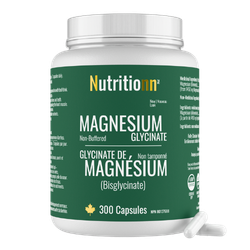
Non-buffered · Fully chelated bisglycinate · NPN 80137688
We recommend this product because it meets our editorial criteria: single active ingredient, transparent elemental dosing, non-buffered fully chelated form, and licensed for sale as a natural health product in Canada (NPN 80137688), which may be a useful Canadian regulatory marker for some buyers.
MagnesiumGlycinate.org is published by the team behind Nutritionn.com. Product recommendations reflect our own formulation and quality standards.
Editorial note:This content is for educational purposes only and does not constitute medical advice. Always consult a qualified healthcare practitioner before starting any supplement, especially if you have a medical condition or take prescription medications. Individual results vary.
References:
1. Schuster J, Cycelskij I, Lopresti A, Hahn A. Magnesium Bisglycinate Supplementation in Healthy Adults Reporting Poor Sleep: A Randomized, Placebo-Controlled Trial. Nature and Science of Sleep. 2025;17:2027-2040. doi: 10.2147/NSS.S524348.
2. American Academy of Sleep Medicine. A patient guide to understanding behavioral and psychological treatments for chronic insomnia disorder in adults. Accessed April 2026.
3. National Heart, Lung, and Blood Institute. Sleep Apnea Symptoms. Updated January 9, 2025.
4. Arab A, Rafie N, Amani R, Shirani F. The Role of Magnesium in Sleep Health: a Systematic Review of Available Literature. Biological Trace Element Research. 2023;201(1):121-128. doi: 10.1007/s12011-022-03162-1.
5. Rawji A, Peltier MR, Mourtzanakis K, et al. Examining the Effects of Supplemental Magnesium on Self-Reported Anxiety and Sleep Quality: A Systematic Review. Cureus. 2024;16(4):e59317. doi: 10.7759/cureus.59317.
6. Mah J, Pitre T. Oral magnesium supplementation for insomnia in older adults: a Systematic Review & Meta-Analysis. BMC Complementary Medicine and Therapies. 2021;21(1):125. doi: 10.1186/s12906-021-03297-z.
7. He C, Wang B, Chen X, et al. The Mechanisms of Magnesium in Sleep Disorders. Nature and Science of Sleep. 2025;17:2639-2656. doi: 10.2147/NSS.S552646.
8. Zhang Y, Chen C, Lu L, et al. Association of magnesium intake with sleep duration and sleep quality: findings from the CARDIA study. Sleep. 2022;45(4):zsab276. doi: 10.1093/sleep/zsab276.
9. National Institutes of Health, Office of Dietary Supplements. Magnesium - Health Professional Fact Sheet. Updated January 6, 2026.
10. Breus MJ, Hooper S, Lynch T, Hausenblas HA. Effectiveness of Magnesium Supplementation on Sleep Quality and Mood for Adults with Poor Sleep Quality: A Randomized Double-Blind Placebo-Controlled Crossover Pilot Trial. Medical Research Archives. 2024;12(7). doi: 10.18103/mra.v12i7.5410.
11. Hausenblas HA, Lynch T, Hooper S, et al. Magnesium-L-threonate improves sleep quality and daytime functioning in adults with self-reported sleep problems: A randomized controlled trial. Sleep Medicine X. 2024;8:100121. doi: 10.1016/j.sleepx.2024.100121.
12. Lopresti AL, Smith SJ. The effects of magnesium L-threonate (Magtein) on cognitive performance and sleep quality in adults: a randomised, double-blind, placebo-controlled trial. Frontiers in Nutrition. 2026;12:1729164. doi: 10.3389/fnut.2025.1729164.
13. Edinger JD, Arnedt JT, Bertisch SM, et al. Behavioral and psychological treatments for chronic insomnia disorder in adults: an American Academy of Sleep Medicine clinical practice guideline. Journal of Clinical Sleep Medicine. 2021;17(2):255-262. doi: 10.5664/jcsm.8986.
14. Pardo MR, Garicano Vilar E, San Mauro Martin I, Camina Martin MA. Bioavailability of magnesium food supplements: A systematic review. Nutrition. 2021;89:111294. doi: 10.1016/j.nut.2021.111294.
.png)
.png)
.png)
.png)