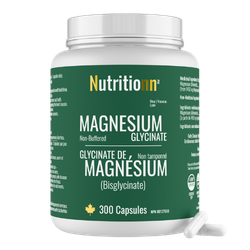
One bottle says “chelated magnesium.” Another says “magnesium glycinate.” A third adds “bisglycinate” or “buffered.” If you are wondering whether these labels describe the same supplement, you are asking a useful question.
Magnesium glycinate is a type of chelated magnesium, but the terms are not interchangeable. “Chelated” describes a chemical bonding arrangement; “glycinate” identifies the glycine-based form. “Magnesium glycinate” and “magnesium bisglycinate” commonly name the same compound. The complete ingredient list still matters because a finished product may contain additional magnesium forms.
Understanding that distinction helps you compare magnesium supplements without assuming that a longer name means better absorption or better results.
What is chelated magnesium?
In chemistry, a chelate forms when a binding molecule attaches to a metal at two or more points. Picture one molecule holding the metal in more than one place. That is more specific than simply mixing a mineral with another ingredient, as the IUPAC definition of chelation explains.
For magnesium glycinate, the binding molecules come from glycine, an amino acid. However, chelation is a broader chemical concept. The word “chelated” alone does not identify glycine or tell you the complete composition of a supplement.
That means “chelated magnesium vs. magnesium glycinate” is not quite a comparison between two separate forms. One term describes the bonding arrangement, and the other names a particular compound. If you specifically want glycinate, look for that name in the ingredient information.
Magnesium citrate is a different magnesium compound involving citric acid, while magnesium oxide is not an amino acid chelate. These distinctions identify the ingredients; they do not establish a universal ranking of magnesium products. Our guide to different magnesium forms explains the wider range.
Magnesium glycinate vs. bisglycinate: what does “bis” mean?
Magnesium bisglycinate pairs one magnesium ion with two glycine molecules, more precisely their glycinate forms. The prefix “bis” refers to those two molecules. It does not mean twice as much magnesium, twice the strength, or twice the absorption.
Health Canada’s ingredient database lists magnesium glycinate, magnesium diglycinate, and magnesium bisglycinate as common names for the same chemical substance. This supports the naming distinction; it does not verify any particular supplement’s composition or authorize a finished oral product.
Two bottles can therefore use different versions of the name while supplying the same underlying magnesium compound. Conversely, two bottles both labeled “magnesium glycinate” can differ in elemental dose, additional ingredients, serving size, and manufacturing quality.
There is no sound basis for assuming that a supplement labeled “bisglycinate” is inherently better absorbed than one labeled “glycinate.” You would need information about the actual formulations and a relevant comparison, not just the extra syllable.
Buffered vs. fully chelated magnesium glycinate
Buffered magnesium glycinate can contain a mixture of magnesium bisglycinate chelate and magnesium oxide. For example, ingredient supplier Balchem describes a buffered bisglycinate ingredient with additional magnesium oxide. This is useful evidence about that ingredient’s composition, not independent evidence of superior health benefits.
“Buffered” and “chelated” are not mutually exclusive: a formula can contain a chelated ingredient alongside another magnesium source. Added magnesium oxide contributes magnesium; it should not automatically be dismissed as an inactive filler.
To see the distinction, imagine one label listing “magnesium as magnesium bisglycinate chelate” and another listing “magnesium as magnesium bisglycinate chelate and magnesium oxide.” The second describes a mixed formula. The first names the chelate as its magnesium source, although the label alone is not laboratory verification of the finished product.
Magnesium oxide in buffered formulas
Oxide and glycinate have different proportions of magnesium by weight, so combining them can change how much elemental magnesium fits in a serving. It does not follow that every buffered product has the same composition, absorption, or digestive effects.
If a brand uses “fully chelated” on the front, check the complete ingredient information as well. If the source or proportions remain unclear, ask the manufacturer. The phrase itself does not establish that a product is oxide-free, fully absorbed, or clinically superior.
Elemental magnesium: the number that makes comparisons useful
Elemental magnesium means the amount of magnesium itself, separate from the rest of the compound. On a U.S. Supplement Facts panel, the amount listed for magnesium is the elemental amount. The larger weight of magnesium glycinate powder or another magnesium compound is a different measurement.
Here is a hypothetical label example: “Magnesium, 200 mg, from magnesium bisglycinate,” with a serving size of two identical capsules. That provides 200 mg of elemental magnesium per serving and 100 mg per capsule. The example illustrates label reading, not a recommended dose.
A different bottle advertising “1,000 mg magnesium glycinate” on the front does not necessarily provide 1,000 mg of elemental magnesium. Find the magnesium amount and serving size in the nutrition information before comparing it with the first product.
FDA labeling guidance explains how nutrient amounts, ingredient sources, and serving sizes appear on U.S. supplement labels. The percentage Daily Value is a general labeling reference, not an individualized prescription.
When comparing price, use the same elemental amount and number of servings. Comparing the front-label compound weights alone can make two very different products look equivalent.
Does chelated magnesium guarantee better absorption?
No. Chelation describes chemistry; it does not guarantee a particular absorption percentage or prove that a supplement will outperform every other magnesium form.
A 2021 systematic review by Pardo and colleagues included 14 studies and found that inorganic formulations appeared less bioavailable than organic formulations overall. The absorbed proportion also depended on dose. This supports considering the form, but it does not establish that all chelated magnesium supplements are superior to citrate or every buffered formula.
What the human comparison studies show
In a 60-day trial involving 46 healthy adults, magnesium citrate and a tested amino acid chelate produced greater urinary magnesium responses than magnesium oxide. Citrate performed best on some blood and saliva measurements. These findings concern specific preparations and absorption-related markers, not proof of better sleep or symptom relief.
A small study of magnesium diglycinate in 12 patients with ileal resection found no significant overall absorption difference compared with oxide. Diglycinate performed better in a subgroup of four patients who absorbed oxide particularly poorly and was better tolerated. That is a useful clinical observation, but it cannot establish what every healthy adult will experience.
Together, these studies support a measured conclusion: formulation can matter, and glycinate is a reasonable option to discuss when choosing a supplement. They do not support a universal “best absorbed” claim, a guaranteed gentle stomach, or the assumption that a chelate always travels through digestion unchanged.
Absorption is not the same as a health benefit
A study showing that the body absorbs more magnesium answers a different question from a trial showing that people feel or function better. To judge a claim about sleep, cramps, or another symptom, look for research measuring that outcome in a relevant population.
For example, a 2025 randomized trial of magnesium bisglycinate enrolled 155 adults reporting poor sleep. Over four weeks, 250 mg of elemental magnesium daily produced a small additional improvement in self-reported insomnia severity compared with placebo.
The trial did not compare bisglycinate with citrate, oxide, or another chelated magnesium product. It therefore cannot tell us that bisglycinate is the best form for sleep or that the word “chelated” predicts a benefit. It also does not establish a guaranteed time to notice an effect. Our magnesium glycinate and sleep guide explores that question further.
How to choose chelated magnesium supplements
Start with why you are considering magnesium. Magnesium is an essential mineral involved in normal muscle function, nerve signaling, and energy metabolism. Those roles do not mean everyone benefits from taking more.
To help maintain adequate magnesium intake, review your diet: beans, nuts, seeds, whole grains, and leafy greens provide magnesium. A supplement can help fill an intake gap when appropriate.
Next, identify the actual magnesium source, elemental amount per serving, and number of capsules, tablets, or scoops. Check for other magnesium forms and additional active ingredients. A product combining several ingredients is not directly comparable with a single-ingredient glycinate supplement.
Choose a format you can use as directed and a dose appropriate to your circumstances. A higher number on the front of the bottle is not a reason, by itself, to take more. If you are switching products, compare their elemental amounts before keeping the same capsule count. If a product causes digestive discomfort, review both the dose and formulation with a clinician.
Independent quality certification can add useful reassurance about what a product contains. However, as the NIH Office of Dietary Supplements explains, quality seals do not guarantee safety or effectiveness. Check what a certification actually covers rather than treating it as proof of a sleep or absorption claim.
Safety and side effects of magnesium supplements
“Chelated” does not remove the usual precautions. The NIH magnesium fact sheet gives an adult upper limit of 350 mg daily from supplements and medications, excluding magnesium naturally present in food and beverages. This is a safety limit, not a daily supplement target; a clinician may recommend a different dose for a specific reason.
Excess supplemental magnesium can cause diarrhea, nausea, and abdominal cramping. Severe magnesium toxicity can cause serious side effects, including low blood pressure and an irregular heartbeat. Impaired kidney function increases the risk. Ask your doctor before supplementing if you have kidney disease.
Magnesium can reduce absorption of certain antibiotics and osteoporosis medicines. Some diuretics and acid-suppressing medicines also affect magnesium status. A pharmacist can check your prescribed medicines and any spacing needed.
For a practical follow-up, see our magnesium glycinate dosage guide and side effects guide.
Frequently asked questions
Is magnesium glycinate the same as glycine?
No. Glycine is an amino acid. Magnesium glycinate is a compound containing magnesium coordinated with glycine-derived molecules. A glycine-only supplement is not a substitute for the magnesium supplied by magnesium glycinate.
Does “fully chelated” mean 100% absorbed?
No. The wording describes a claimed ingredient characteristic, not a measured absorption rate in your body. Claims such as “high absorption” or “easily absorbed” need relevant evidence for the formulation, dose, and conditions being discussed.
Does a powder work better than capsules or tablets?
The delivery format alone does not establish better clinical results. Compare the magnesium source and elemental dose, along with how the product is used. A powder may suit your routine, but its scoop weight is not necessarily its magnesium content.
Can I take a chelated magnesium product and magnesium glycinate together?
They may duplicate the same ingredient. Check both labels and add the elemental amounts before combining products. Taking two differently named supplements does not necessarily provide different forms or an additional benefit.
Should I switch just because my bottle says “glycinate” instead of “bisglycinate”?
The name alone is not a reason to switch. First compare the ingredient list, elemental dose, serving size, quality information, and your experience with the product. The shorter name can describe the same compound.
Chelated magnesium vs. magnesium glycinate: key differences
Magnesium glycinate belongs within the broader category of chelated magnesium. Glycinate and bisglycinate commonly refer to the same compound, while buffered formulas may add another magnesium source.
Once you recognize those distinctions, the decision becomes more manageable: identify the ingredients, compare elemental doses, and choose a form of magnesium that fits your needs. Clear labeling and realistic expectations are more useful than a promise that one word on a bottle guarantees better health.
This article provides general education and does not replace individualized advice from your healthcare professional.
References
Balchem. (n.d.). Magnesium bisglycinate chelate. https://balchem.com/hnh/products/mn/mg/magnesium-bisglycinate-chelate/
Health Canada. (2019, March 1). Chemical substance: Magnesium bisglycinate. Natural Health Products Ingredients Database. https://webprod.hc-sc.gc.ca/nhpid-bdipsn/ingredReq?id=12621&wbdisable=true
International Union of Pure and Applied Chemistry. (2025). Chelation. In Compendium of chemical terminology (5th ed., online version 5.0.0). https://doi.org/10.1351/goldbook.C01012
National Institutes of Health, Office of Dietary Supplements. (2023, January 4). Dietary supplements: What you need to know. https://ods.od.nih.gov/factsheets/WYNTK-Consumer/
National Institutes of Health, Office of Dietary Supplements. (2026, January 6). Magnesium: Fact sheet for health professionals. https://ods.od.nih.gov/factsheets/Magnesium-HealthProfessional/
Pardo, M. R., Garicano Vilar, E., San Mauro Martín, I., & Camina Martín, M. A. (2021). Bioavailability of magnesium food supplements: A systematic review. Nutrition, 89, 111294. https://doi.org/10.1016/j.nut.2021.111294
Schuette, S. A., Lashner, B. A., & Janghorbani, M. (1994). Bioavailability of magnesium diglycinate vs magnesium oxide in patients with ileal resection. Journal of Parenteral and Enteral Nutrition, 18(5), 430–435. https://doi.org/10.1177/0148607194018005430
Schuster, J., Cycelskij, I., Lopresti, A., & Hahn, A. (2025). Magnesium bisglycinate supplementation in healthy adults reporting poor sleep: A randomized, placebo-controlled trial. Nature and Science of Sleep, 17, 2027–2040. https://doi.org/10.2147/NSS.S524348
U.S. Food and Drug Administration. (2005, April). Dietary supplement labeling guide: Chapter IV. Nutrition labeling. https://www.fda.gov/food/dietary-supplements-guidance-documents-regulatory-information/dietary-supplement-labeling-guide-chapter-iv-nutrition-labeling
Walker, A. F., Marakis, G., Christie, S., & Byng, M. (2003). Mg citrate found more bioavailable than other Mg preparations in a randomised, double-blind study. Magnesium Research, 16(3), 183–191. https://pubmed.ncbi.nlm.nih.gov/14596323/