Magnesium is essential for bone health. Higher magnesium intake is associated with better bone mineral density in several studies, particularly at the hip. Magnesium supplements have not been established as a treatment for osteoporosis or a way to prevent fractures.
Calcium and vitamin D usually lead the conversation about bones. Magnesium deserves a place beside them: about 50–60% of the body's magnesium is stored in bone. Meeting your needs is a practical, worthwhile goal, even while supplement research continues.
If you are reviewing your diet after a low bone density result, navigating menopause, or planning for healthy aging, this guide explains magnesium for bone health: what the evidence shows, how much adults need, and when a supplement may be useful.
How does magnesium support bone metabolism?
Bone is much more active than it appears. Throughout life, specialized cells remove older bone and replace it with new tissue. This process, called bone remodeling, helps maintain the skeleton.
Osteoclasts carry out bone resorption, the removal of existing bone. Osteoblasts are involved in bone formation. Their activity is influenced by hormones, nutrition, movement, age, and health conditions.
Magnesium contributes to bone mineralization, the incorporation of minerals into bone tissue, and to the activity of bone cells. It also participates in vitamin D metabolism and parathyroid hormone regulation, which help coordinate calcium balance. Significant magnesium deficiency can disrupt these connected systems.
Researchers are studying how magnesium affects bone cells, mineral crystals, and signaling involved in remodeling. Much of the detailed mechanistic work comes from laboratory or animal studies. It helps explain why adequate magnesium matters, while human trials are needed to establish what a supplement can achieve.
What does research show about magnesium and bone mineral density?
Higher dietary magnesium intake is associated with greater bone mineral density in some human studies. This does not establish that a supplement will increase bone density. The study design matters when interpreting the finding. Bone mineral density, or BMD, measures the mineral content within an area of bone. It is useful for assessing skeletal health, although fracture risk depends on more than this number.
A 2022 systematic review by Groenendijk and colleagues examined 12 observational studies in adults aged 60 and older. Across the evidence, higher magnesium intake tended to accompany higher bone density at the hip and femoral neck, the narrow region just below the ball of the hip joint. A meta-analysis of four studies found a positive association with hip BMD.
This supports paying attention to magnesium intake. It does not show that a supplement caused the difference. People who eat more magnesium may also consume more legumes, nuts, whole grains, and vegetables, or have other habits that influence bone health. Statistical adjustments help, but they cannot remove every difference between people.
Higher bone density does not always mean fewer fractures
The Women's Health Initiative Observational Study followed 73,684 postmenopausal women. In the subgroup with bone measurements, women with the highest magnesium intakes had higher hip and whole-body BMD than those with the lowest intakes.
However, hip and total fracture rates did not differ significantly across intake groups. Some higher-intake groups had more lower-arm or wrist fractures and falls, possibly related to greater physical activity. This does not establish that magnesium caused harm. It shows why one favorable bone measurement cannot stand in for the entire fracture picture.
For a reader choosing a supplement, the distinction matters: an association between magnesium intake and bone density is not proof that taking more magnesium will prevent a broken bone.
What newer research adds
A 2026 retrospective study by Shi and colleagues examined records from 496 hospitalized postmenopausal women. Lower serum magnesium was associated with osteoporosis, and women with osteoporotic fractures also had lower magnesium levels than those without fractures.
The study adds to the reason for investigating magnesium status, but it did not test a supplement. Its hospital-based population, retrospective design, and potential confounding limit what can be concluded. It cannot show that raising magnesium levels would prevent osteoporosis or fractures in otherwise healthy adults.
The newer evidence therefore strengthens the case for further research while leaving the main practical advice intact: meet nutritional needs, assess individual risk, and use established bone care when indicated.
Can magnesium supplements improve bone health?
A supplement can help supply magnesium when food intake is insufficient or a clinician identifies a need. Whether supplementation reliably improves bone density or reduces fractures is a separate question, and large, well-designed trials remain limited.
A 2010 study by Aydin and colleagues involved 20 postmenopausal women with osteoporosis. Ten received magnesium citrate for 30 days, while ten served as controls. The supplemented group had changes in parathyroid hormone, osteocalcin, and a urinary marker of bone breakdown.
These bone turnover markers provide information about remodeling activity. The findings are interesting, but the study was small and short. It did not demonstrate that participants developed stronger bones or experienced fewer fractures.
That leaves a reasonable place for optimism: magnesium is biologically relevant, observational findings are supportive, and small intervention studies offer signals worth investigating. The evidence does not yet justify presenting magnesium supplementation as an osteoporosis treatment.
How much magnesium do you need for bone health?
For women aged 19–30, the recommended daily intake is 310 mg; from age 31 onward, it is 320 mg. For men, the corresponding amounts are 400 mg and 420 mg. These are the U.S. and Canadian reference intakes for healthy, nonpregnant adults and include magnesium from all sources.
They are not recommended supplement doses. If your meals already provide enough, there may be no nutritional gap for an extra capsule to fill. Pregnancy and certain medical circumstances require different considerations.
A diagnosis of osteoporosis does not create a proven high-dose magnesium protocol. The appropriate amount depends on usual intake, health history, medicines, and whether deficiency is present. Meeting the normal requirement is a sensible starting point to discuss with your care team.
The pattern across your usual meals matters more than making every day mathematically perfect. If nuts, seeds, legumes, whole grains, and greens rarely appear, there may be an easy opportunity to improve intake.
Can food provide enough magnesium for bone health?
Many adults can meet their magnesium needs through food. Magnesium-rich foods can fit comfortably into an everyday eating pattern. You might stir chia seeds into yogurt, add beans to soup, choose a whole-grain side, or keep nuts available for a snack.
Osteoporosis Canada's food resource lists approximately 109 mg of magnesium in two tablespoons of chia seeds, 96 mg in a quarter cup of cashews, and 44 mg in half a cup of canned black beans. Exact amounts vary with the food and serving size, but these examples show how several ordinary additions can contribute meaningfully.
They do not all have to appear in the same day. Start with a meal you already eat regularly. Adding seeds to breakfast may be easier to sustain than planning a completely new menu. If beans are already part of dinner, keeping that habit has value too.
Food also lets you work on more than one nutritional goal at once. A meal can contain magnesium-rich ingredients alongside a protein source and calcium-containing foods. The aim is a balanced diet that fits your preferences and circumstances.
How do magnesium, calcium, and vitamin D work together?
These nutrients have connected but distinct roles. Calcium supplies much of bone's mineral structure. Vitamin D helps calcium absorption from the intestine. Magnesium participates in mineral metabolism, including processes involved in converting vitamin D to its active form.
Sometimes this relationship is simplified into a rule that everyone taking vitamin D must also take magnesium. The physiology supports avoiding inadequacy. It does not establish that every vitamin D user needs an additional magnesium supplement.
The same applies to fixed calcium-to-magnesium ratios. A ratio printed on a bottle does not tell you whether your total diet supplies the right amount of either nutrient. Review each nutrient against your needs and the food you already eat.
If you have been prescribed calcium or vitamin D for a particular reason, discuss any changes with your clinician. Magnesium can complement an appropriate plan without replacing another nutrient or a prescribed treatment.
Is magnesium glycinate better for bones than magnesium citrate?
No magnesium form has been established as superior for improving bone density or preventing fractures. The small citrate study is evidence about that particular intervention and its measured markers. It is not a comparison proving that citrate works better than glycinate.
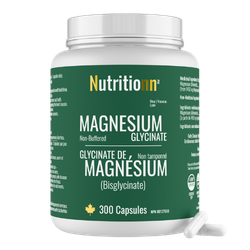
Magnesium glycinate can be a practical way to add elemental magnesium if supplementation is appropriate. Its relevance is that it supplies the nutrient. A claim that it specifically rebuilds bone, delivers magnesium directly to the skeleton, or reverses osteoporosis would require evidence that is currently lacking.
Absorption and digestive tolerance matter when choosing a supplement, but they are not the same as demonstrated effects on fractures. A product that looks attractive on a label still needs to fit your actual intake and medical circumstances.
Compare the elemental magnesium per serving, the number of capsules needed, clear ingredient information, and how the product agrees with you. Our magnesium forms guide explains these practical differences.
When is a supplement worth discussing?
Supplementation may be useful when a persistent dietary gap is difficult to close or when a healthcare professional identifies deficiency or another specific reason. Digestive disease can affect intestinal absorption, and some medicines, including certain diuretics and long-term proton pump inhibitors, can affect magnesium status. These circumstances can make assessment more relevant.
A useful conversation starts with what you eat, what medicines you take, and what the supplement is intended to accomplish. “I want to cover a dietary shortfall” is a clearer goal than “I want the strongest bone supplement.”
If testing is being considered, remember that a serum magnesium concentration is only part of the assessment. It does not measure the magnesium stored in your bones and cannot replace a bone-density scan or fracture-risk evaluation. Our magnesium deficiency article explains the strengths and limits of testing.
Safety and osteoporosis medicines
For adults in the United States and Canada, the upper intake level for magnesium from supplements and medications is 350 mg per day. Magnesium naturally present in food is not counted toward this limit. The limit is based mainly on digestive side effects and is distinct from total daily nutritional requirements.
Higher doses may be used under medical supervision, but a larger amount is not automatically better for bones. Check combined products, antacids, and laxatives so that magnesium is not unintentionally duplicated.
People with chronic kidney disease should seek professional advice before supplementing because impaired kidneys may not clear magnesium effectively. Diarrhea, nausea, or cramping are reasons to review the product and dose.
Magnesium can reduce absorption of oral bisphosphonates used for osteoporosis, as well as certain antibiotics. Ask a pharmacist how to separate your exact medicines and supplements; timing instructions vary. Our magnesium safety guide covers these considerations in more detail.
Give magnesium a place in the whole bone-health plan
Strong bones depend on nutrition, movement, and appropriate medical care. Adequate calcium, vitamin D, and protein remain important. So do activities that develop strength, balance, and physical function.
Osteoporosis Canada's clinical guidance emphasizes balance and functional training, together with progressive resistance exercise. Weight-bearing activities can also form part of a suitable routine. If you have osteoporosis or previous fractures, the type and intensity of exercise should be adapted to your risk and abilities.
Nutrition cannot replace assessment after a low-trauma fracture, such as a break following a fall from standing height. Bone-density testing, fracture history, medicines, and other risk factors help determine whether osteoporosis treatment is needed. Magnesium supplements have not been shown to offer the fracture protection of established therapies.
During and after menopause, it can be especially helpful to review the whole plan rather than concentrating on one mineral. Our menopause and magnesium guide explores that wider context.
Frequently asked questions about magnesium and bone health
Can magnesium reverse osteoporosis?
Magnesium supplementation has not been established as a way to reverse osteoporosis. Correcting an inadequate intake or deficiency can support normal physiology, while treatment decisions should be based on a full assessment of bone health and fracture risk.
How much magnesium should someone with osteoporosis take?
There is no established magnesium supplement dose for treating osteoporosis. Total daily needs usually remain 310–320 mg for nonpregnant adult women and 400–420 mg for adult men, depending on age. A clinician can assess whether diet, deficiency, kidney function, or medicines change the appropriate plan.
Is magnesium more important than calcium?
Both are essential and have different roles. The useful question is whether you are meeting your needs for each, alongside vitamin D, protein, movement, and any indicated medical treatment.
How long does it take for magnesium to improve bone density?
There is no established magnesium-specific timeline for improving BMD. Changes in blood tests or bone turnover markers do not prove that bone density has increased. Follow your clinician's plan for monitoring rather than using symptoms to judge bone strength.
Does magnesium deficiency cause bone loss?
Significant deficiency can disrupt mineral regulation and normal bone physiology. However, osteoporosis has many contributing factors, and low magnesium alone cannot explain every case of bone loss. Correcting a deficiency is appropriate care; whether extra magnesium preserves bone mass in people already getting enough remains uncertain.
Does normal blood magnesium mean my bones are healthy?
No. Serum magnesium is a blood measurement, not a test of bone strength. Conversely, a low result does not diagnose osteoporosis. Each finding needs to be interpreted in its own clinical context.
A practical place to start
Magnesium is a meaningful part of bone health, and improving an inadequate intake is an achievable step. You do not need to wait for a dramatic supplement result to make that worthwhile.
Look at your usual meals, identify a realistic way to include more magnesium-rich foods, and discuss a supplement if a genuine gap remains. Keep that step connected to strength, balance, other nutritional needs, and individualized bone care. It is a steady approach with room for both optimism and good science.
Evidence reviewed October 24, 2026. This article provides general education and does not replace individualized medical advice, diagnosis, or treatment.
References
Aydin, H., Deyneli, O., Yavuz, D., Gözü, H., Mutlu, N., Kaygusuz, I., & Akalin, S. (2010). Short-term oral magnesium supplementation suppresses bone turnover in postmenopausal osteoporotic women. Biological Trace Element Research, 133(2), 136–143. https://doi.org/10.1007/s12011-009-8416-8
Groenendijk, I., van Delft, M., Versloot, P., van Loon, L. J. C., & de Groot, L. C. P. G. M. (2022). Impact of magnesium on bone health in older adults: A systematic review and meta-analysis. Bone, 154, 116233. https://doi.org/10.1016/j.bone.2021.116233
Health Canada. (n.d.). Dietary reference intakes tables: Reference values for elements. Retrieved October 24, 2026, from https://www.canada.ca/en/health-canada/services/food-nutrition/healthy-eating/dietary-reference-intakes/tables/reference-values-elements.html
Liu, L., Luo, P., Wen, P., & Xu, P. (2024). The role of magnesium in the pathogenesis of osteoporosis. Frontiers in Endocrinology, 15, 1406248. https://doi.org/10.3389/fendo.2024.1406248
National Institutes of Health, Office of Dietary Supplements. (2026, January 6). Magnesium: Fact sheet for health professionals. https://ods.od.nih.gov/factsheets/Magnesium-HealthProfessional/
Orchard, T. S., Larson, J. C., Alghothani, N., Bout-Tabaku, S., Cauley, J. A., Chen, Z., LaCroix, A. Z., Wactawski-Wende, J., & Jackson, R. D. (2014). Magnesium intake, bone mineral density, and fractures: Results from the Women's Health Initiative Observational Study. The American Journal of Clinical Nutrition, 99(4), 926–933. https://doi.org/10.3945/ajcn.113.067488
Osteoporosis Canada. (n.d.-a). Magnesium. https://osteoporosis.ca/magnesium/
Osteoporosis Canada. (n.d.-b). Magnesium food sources. https://osteoporosis.ca/magnesium-food-sources/
Osteoporosis Canada. (2024). Quick reference guide: Clinical practice guideline for management of osteoporosis and fracture prevention in Canada: 2023 update. https://osteoporosis.ca/wp-content/uploads/2024/11/Quick-Reference-Guide-FINAL_Nov202493.pdf
Shi, D., Li, X., Men, N., Ren, B., Ma, Y., Wang, L., Zhang, Z., He, K., Du, X., & Wang, J. (2026). Serum magnesium is associated with osteoporosis risk in postmenopausal women: A retrospective study and risk-prediction model. Frontiers in Medicine, 13, 1770830. https://doi.org/10.3389/fmed.2026.1770830